
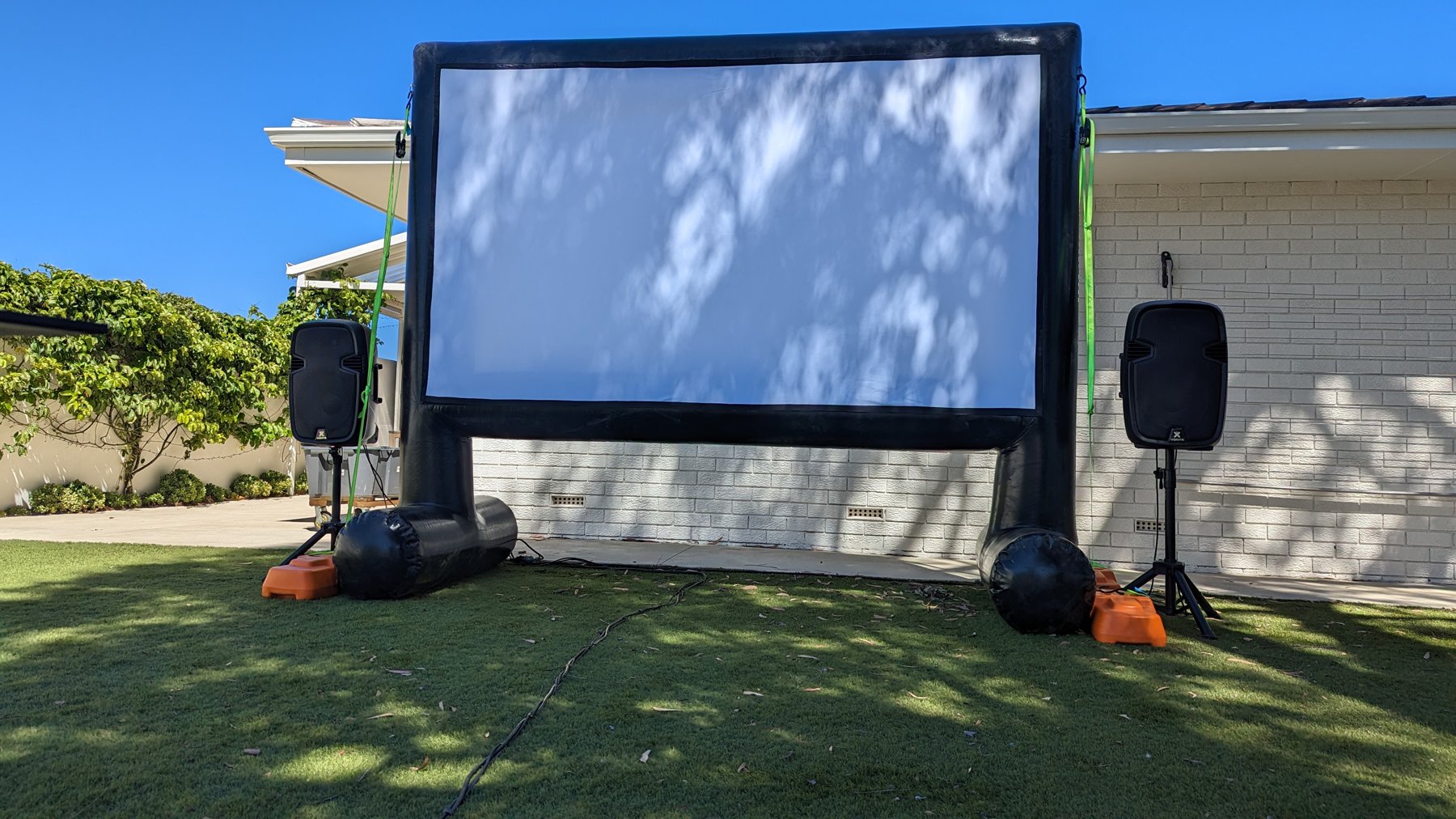
Every outdoor movie booking I take starts with the same question: what time should we tell people the film starts? The honest answer is that the sky decides, not you. This page is the reference I wish I could hand every host. It covers when Perth actually gets dark enough for a projector, month by month, and the start time you can safely print on the invitations.
The Quick Answer: Dark Enough Is About 35 Minutes After Sunset
Sunset is not dark. When the sun dips below the horizon, the sky stays bright for a while because sunlight is still bouncing through the atmosphere above you. Astronomers call this stretch civil twilight, and in Perth it technically lasts roughly 27 to 30 minutes.
Civil twilight ends when the sun sits six degrees below the horizon. In plain language, that's the moment you switch your headlights on and the streetlights have already come on. For an outdoor movie, that is your green light. The picture pops, the blacks look black, and the crowd goes quiet.
I round the practical buffer up to about 35 minutes rather than stopping at the technical 27 to 30 minute mark. The reason: the sky near the horizon, especially to the west, is still noticeably brighter than the rest of the sky for a few minutes after civil twilight officially ends.
That last bit of glow is exactly what washes out a projected image, so the extra few minutes are the difference between a good picture and a great one.
So the working rule I use for every booking is simple: movie start time = Perth sunset + about 35 minutes. Round up to a tidy number for the invitation and you are done.
Perth Sunset and Movie Start Times, Month by Month
These are representative mid-month values for Perth. Sunset drifts a few minutes earlier or later across each month, so check timeanddate.com's Perth sun calendar for your exact date. The start times below already include the twilight buffer.
Two anchors worth memorising. Perth's earliest sunset of the year lands on 11 June at about 5:20pm. The latest is around 8 January at about 7:28pm. Everything else slides smoothly between those two points.
Why Perth Beats the Eastern States for Early Starts
Western Australia does not observe daylight saving. We've voted on it four times and knocked it back every time, most recently in the 2009 referendum by a clear majority. That result gets mocked over east, but for outdoor cinema it is a genuine gift.
With daylight saving pushing their clocks forward, Melbourne's latest sunsets land in early January at about 8:47pm, and Sydney's sunsets push past 8:00pm around the same time. Add the twilight buffer and an eastern-states backyard screening in early January cannot honestly start before roughly 8:40pm to 9:20pm. Kids are melting down before the opening titles.
Perth in the same week? Sunset about 7:25pm, projector dark by 8:00pm. Our worst case start time is better than their best case. A summer backyard movie night here can have the credits rolling while a Melbourne host is still waiting for the sky to cooperate.
School-Night Screenings: Which Months Finish by 9pm
Most kids' films run 90 to 105 minutes. If the goal is credits before 9:00pm on a school night, you need a start time of about 7:15pm or earlier. In Perth that window is wide open from March through October.
The Months That Work for School Nights
- April to August: the golden months. Starts between 5:55pm and 6:30pm mean even a longer film finishes before 8:30pm.
- March, September, October: starts around 6:50pm to 7:10pm still land a 95-minute film under the 9pm wire.
The Months to Save for Weekends
- November to February: starts of 7:35pm to 8:00pm push a kids' film past 9pm. Save these months for Friday and Saturday nights, or school holidays when bedtime rules go soft.
Planning Backwards from Bedtime: Two Worked Examples
The trick is to plan the night in reverse. Pick the finish time first, subtract the film, then check the month allows it.
Example One: A December Birthday
December, 90-minute kids' film. Projector dark is 8:00pm, so the film ends about 9:30pm and guests leave near 10pm. That is a weekend or holidays event, full stop. Run the pre-show from 6:30pm instead: food, games, a playlist while the light fades, then the film becomes the finale rather than the whole evening.
Example Two: The Same Party in April
April, the same 90-minute film. Dark by 6:25pm, credits at 7:55pm, kids in bed by 8:45pm. Same movie, same gear, completely different night, purely because the sun clocks off two and a half hours earlier.
This is exactly why I gently steer birthday cinema bookings for younger kids toward autumn and winter dates when the family has flexibility. The film is the same. The bedtime damage is not.
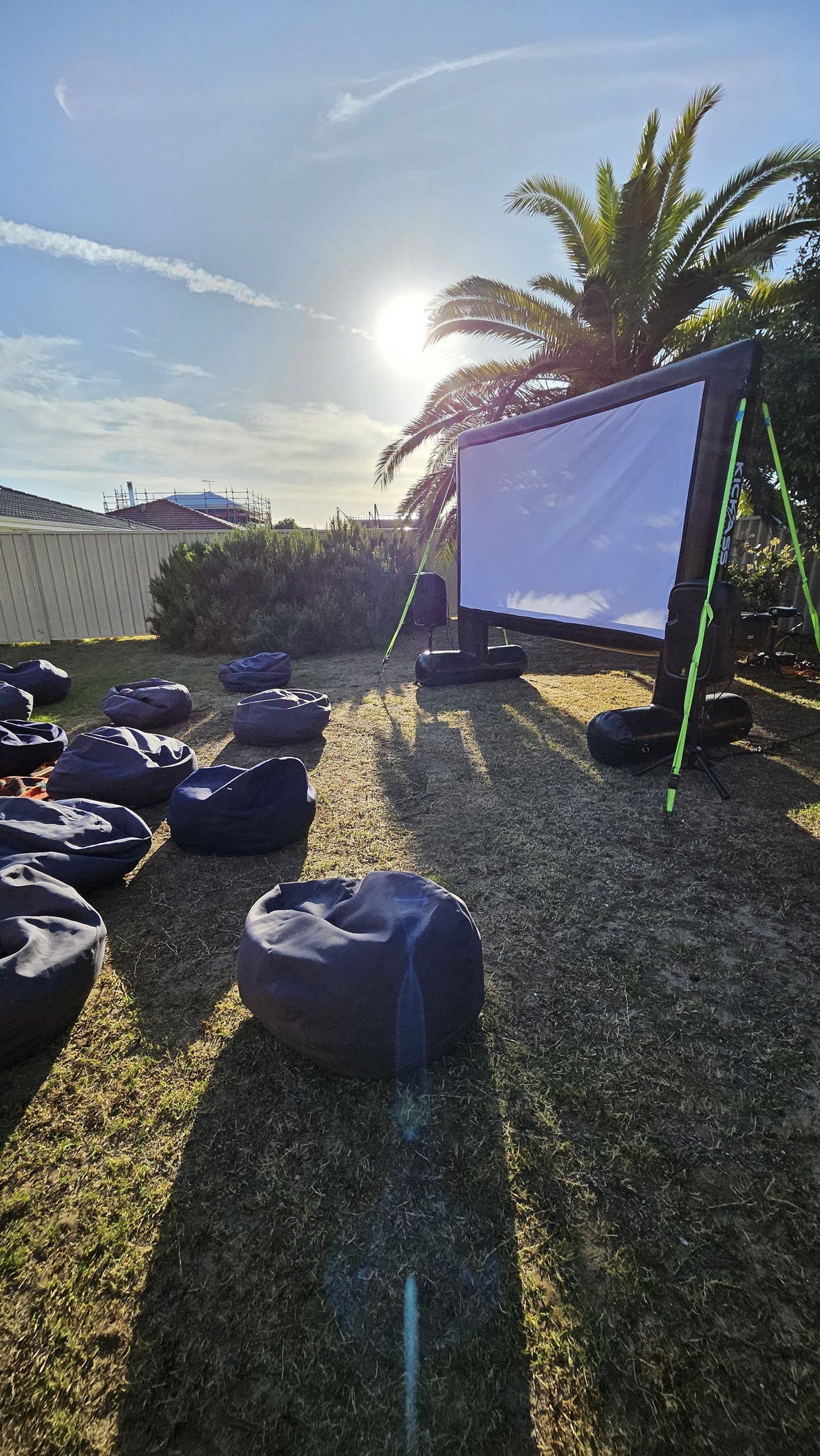
The Twilight Trap: Why Starting Early Washes Out the Picture
A True Story: The 6:45pm Start
Here's a first-hand example. Last November a host insisted on a 6:45pm start, about 15 minutes before sunset, because the invitations had already gone out. I ran it.
For the first half hour the screen showed a pale ghost of the film, and guests kept chatting because nothing on screen demanded attention. By the time the sky finally went dark, the crowd had mentally checked out of act one. I ended up restarting the film at 7:40pm by popular demand.
Why a Washed-Out Picture Happens
A budget projector in twilight is simply outgunned. The sky is still throwing far more light at the screen than the lamp can, so blacks turn grey and the whole image looks like a faded poster.
Cinema-grade projectors like ours have enough brightness to punch through the tail end of twilight, which buys you maybe ten or fifteen minutes of grace. But I will be honest: even with commercial gear, I prefer full dark. The difference between good and magic is that last shade of navy.
Finding the Sweet Spot
The sweet spot, and the moment I never get tired of, is firing up the screen right as the sky goes navy blue. The image blooms out of the dusk, everyone goes quiet at once, and the night starts itself. Aim your schedule at that moment. More setup detail is in our guide to creating the perfect backyard movie night.
Not keen on timing the twilight window yourself? We calculate the exact start time for your date and turn up with commercial-grade projectors bright enough to punch through the last of the dusk. See our cinema hire packages or get in touch to lock in your date.
Sunset Direction and Screen Placement
Which Way to Face the Screen
The sun sets in the west, and the western sky stays bright for a good hour after sunset. So face your screen roughly east, which means the audience sits looking east and the leftover glow sits behind them where it cannot wash out the picture or shine in their eyes.
What If Your Yard Doesn't Cooperate
You do not need a compass bearing. Stand in your yard at dusk, find the brightest patch of sky, and put the screen on the opposite side.
If the yard only works one way, do not panic: the glow fades fast, and by 20 minutes into the film it makes no difference. It only matters for the opening scenes. Ambient light from the house matters too, and our outdoor movie lighting guide covers which lights to leave on and which to kill.
Month Picker by Event Type
- Birthdays: any month works, but for under-10s pick March to October so the film starts before 7:15pm. See birthday cinema hire.
- Halloween: late October is quietly ideal. Sunset drops to around 6:45pm by the 31st, so the yard is properly dark by about 7:15pm, spooky and still school-night friendly. Details on our Halloween movie night page.
- Christmas parties: December means an 8:00pm start, so build a long golden-hour pre-show with food and carols first. See Christmas movie night hire.
- New Year's Eve: the late start is a feature, not a bug. Film at 8:00pm, credits before the countdown. See NYE cinema hire.
- Australia Day (26 January): sunset about 7:20pm, film from 8:00pm after a full afternoon of barbecue and backyard cricket.
- Easter and autumn: April is arguably Perth's best cinema month. Warm evenings, 6:25pm starts, and school holidays usually land in it.
Want the timing handled for you? Every cinema hire package already has the sunset maths built in, so the screen fires up right on cue whatever night you pick. Get in touch with your date and suburb and we will sort the rest.