
Every season we get the same phone call. A school P&C (Parents and Citizens committee) or sports club has booked a screen, picked a film, printed the flyers, and then someone on the committee asks the awkward question. Do we actually have permission to show this movie?
The short answer is that a movie screening licence in Australia is needed for almost every screening outside your own home. The good news is that it is cheap for what it protects, quick to arrange, and we can source it for you. Here is everything we have learned running hundreds of outdoor screenings across Perth.
The 30-second answer: when you need a licence and when you don’t
Under Australian copyright law, playing a film to an audience outside your home and social circle is a public performance, and the copyright owner controls that right. A DVD, a Blu-ray or a streaming subscription only covers private, domestic viewing.
So the rule of thumb is simple. A movie night at home with family and friends needs nothing. A screening run by a school, club, church, council, business or community group needs a public performance licence, whether or not you charge for entry. The education sector’s copyright body Smartcopying spells this out for schools, and the same principle applies to every other organisation.
Backyard and private parties: why your home movie night is exempt
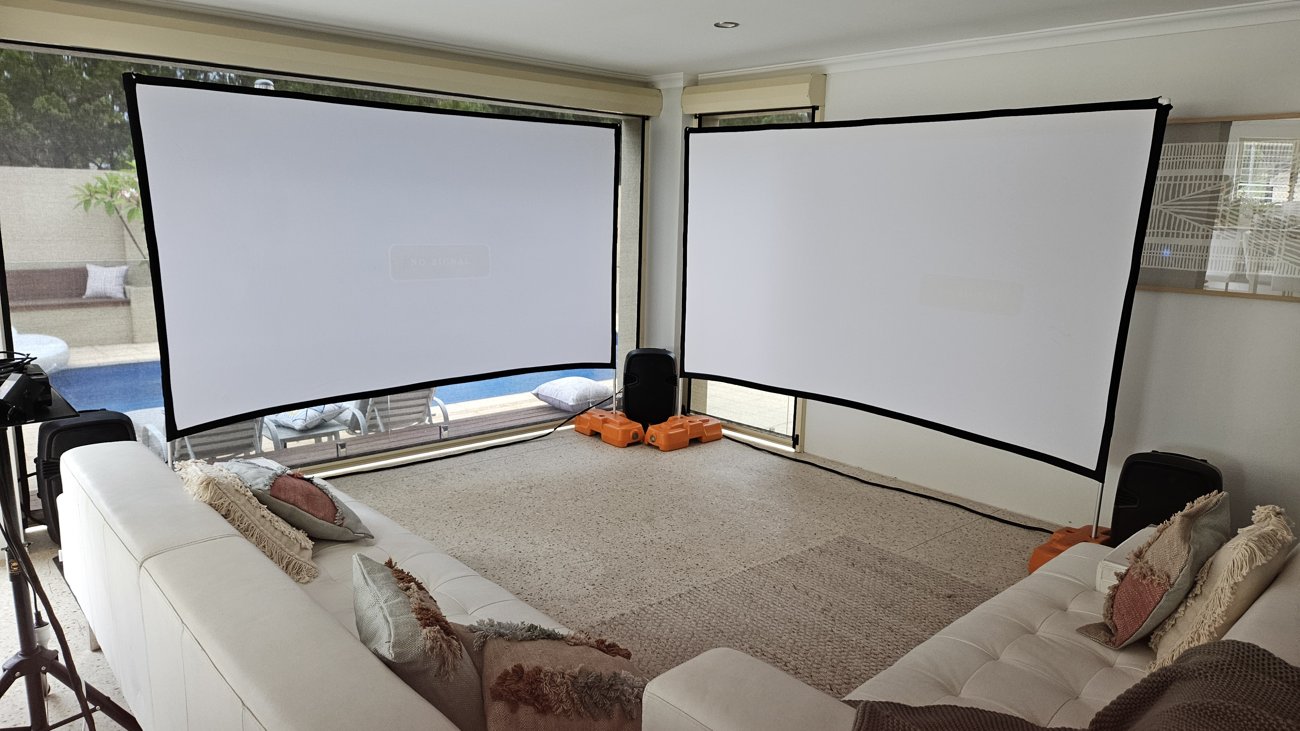
The public performance right (the copyright owner’s control over screenings outside a private home) only bites when the audience goes beyond your domestic circle. A birthday screening in your backyard for family and invited friends is private viewing, so your normal DVD or streaming account is fine. That covers the huge majority of our backyard cinema hires.
The test is who is watching, not where the screen is. Thirty invited mates in your backyard is private. Thirty strangers who saw a Facebook post is public, even if it is the same backyard and nobody paid a cent.
Schools, clubs, churches and councils: why the exemption disappears
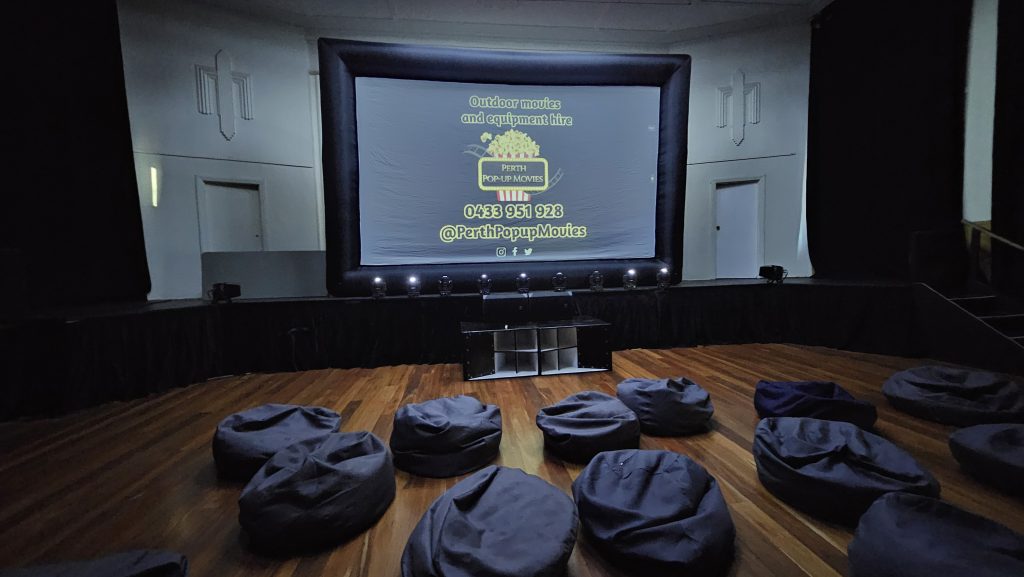
The moment an organisation is the host, the screening is public. Schools, sporting clubs, churches, strata groups and local councils all need a licence for a movie night, and that holds for free events as well as ticketed ones.
Schools have one extra trap that catches committees every year. Many schools hold a Co-Curricular Licence through Roadshow, which covers films shown for entertainment inside normal school life, things like rainy day lunchtime movies and bus trips. According to Smartcopying’s schools copyright guide, that licence explicitly does not apply to fundraising events. So a fundraiser movie night still needs its own one-off licence, even at a fully licensed school.
In our experience the timing is what school committees most often get wrong. They lock in a date, design the poster with the film title on it, and only then look at licensing. Do it the other way around, because you generally cannot advertise the title until the licence is approved. Our school movie night fundraiser guide covers the full run sheet.
Who issues licences in Australia
Two organisations handle nearly all one-off, non-theatrical film licensing in Australia. Which one you deal with depends entirely on which studio made your film.
Roadshow Public Performance Licensing
Roadshow PPL is the largest non-theatrical distributor in Australasia (the licensing body for screenings outside cinemas, such as schools, clubs and community events). It represents the majority of the big studios, including Warner Bros, Universal, Paramount, Disney and 20th Century, plus many local and independent labels. If your film is a mainstream family blockbuster, odds are it sits here.
Amalgamated Movies
Amalgamated Movies is the sole Australian licensee for non-theatrical screenings of Sony Pictures titles (which includes Columbia and TriStar), along with Madman Entertainment, Titan View, Limelight Films and Ronin Films. Sony titles and a lot of Australian and anime releases live here.
Neither body can license a film the other represents, so confirm the distributor before you fall in love with a title. If your first choice turns out to be awkward or expensive, having a backup film from the same distributor saves a second application.
What a one-off screening licence actually costs in 2026
Licence fees are set by the distributor per film and per event, so there is no single public price list. Based on the licences we have sourced for Perth events, this is the realistic landscape.
For free community events and typical school fundraisers, licences commonly land in the $100 to $350 band per screening, with newer blockbuster titles at the top of that range. For ticketed public events, distributors typically quote a minimum fee, sometimes with a percentage of box office on top for bigger nights.
In the deals we have arranged for Perth events, ticketed screenings have typically landed somewhere in the $250 to $550 band. The percentage clause tends only to apply once a screening is genuinely large, so always get the exact quote for your film before you set ticket prices.
Two smaller costs to remember. You usually need a legitimate copy of the film, typically $10 to $35 for a Blu-ray. Fees for ticketed events are often invoiced after the event once attendance or box office is known.
How ticketing changes your licence: free entry, gold coin, ticket sales
How you charge changes the fee, not whether you need a licence. All three models below are public screenings.
Free entry events, like a council community movie night or a church family evening, still need a licence. They generally attract the flat, lower end of the fee range, because there is no box office to take a percentage of.
Gold coin donation events sit in a grey zone that distributors treat as revenue-raising, so declare it honestly on the application. In practice they are usually priced like modest fundraisers rather than commercial ticketed events.
Ticketed events trigger the percentage model. Once you sell tickets, expect the fee to be the greater of a flat minimum or a share of gross ticket sales. That is why smart fundraiser events often keep entry cheap or free and make their margin on food, drinks and bean bag hire instead. Our creative fundraising ideas post digs into that playbook.
Step-by-step: how to apply, timing, classification and advertising
Pick your film and find its distributor
Check whether the studio sits with Roadshow PPL or Amalgamated Movies. Films generally need to be past their cinema window and released on home formats before a non-theatrical licence is granted.
Apply with your event details
You will state the date, venue, expected audience size and whether entry is free, donation or ticketed. Be accurate, because the fee is calculated from these answers.
Wait for approval before advertising
Approval typically takes one to five business days. Until it lands, do not publish the film title, poster art or trailer. Tease the event as a movie night and reveal the title once you are approved.
Respect the classification
Match the film’s classification to your crowd. A PG title at an all-ages public event keeps you inside both your licence conditions and common sense. Display the classification on your promotion.
Screen from a legitimate copy and settle the invoice
Play a purchased disc or approved file, not a personal streaming login. Ticketed events are commonly invoiced after the screening with short payment terms.
The easy option: we can source the licence for you
If the paperwork is the bit putting your committee off, hand it to us. When you book a school screening or club fundraiser with Perth Pop-Up Movies, we can source the public performance licence on your behalf and pass it through at cost plus 10 per cent. You tell us the film, we confirm the distributor, lodge the application with your event details, and time it so your advertising can go out on schedule.
We do this every season, so we know which films tend to quote high and which crowd-pleasers come in at the friendly end of the range. That is handy when your budget is tight.
Planning a public screening?
Tell us your film, date and crowd size and we will quote the screen, the setup and the licence in one email.
Get a quote See community screens
Budgeting example: a school fundraiser night with licence included
Here is the shape of a typical Perth primary school fundraiser we see, for a crowd of around 150 to 200 on the school oval with gold coin entry and a sausage sizzle.
A staffed 5m community screen package starts from $600 and includes the screen, projector, PA, delivery, setup and pack down. A licence for a popular family title at this event size typically lands around $150 to $350.
On top of that, budget our 10 per cent sourcing fee if we arrange the licence for you, plus the cost of a legitimate Blu-ray copy. Add bean bag hire at $11 each if you want a paid premium seating zone, which in our experience is the single easiest extra revenue line a committee can add.
All up, most committees budget roughly $850 to $1,100 for the full night and clear that comfortably through food, drinks and seating before the opening credits finish. Bigger events scale to the 8m community screen, which handles crowds up to 1,200.
A quick note on all of the above. This guide is general information based on our own experience sourcing public performance licences for Perth events, not legal advice. Please confirm the requirements for your specific event and film with Roadshow PPL or Amalgamated Movies before you lock in a date.