
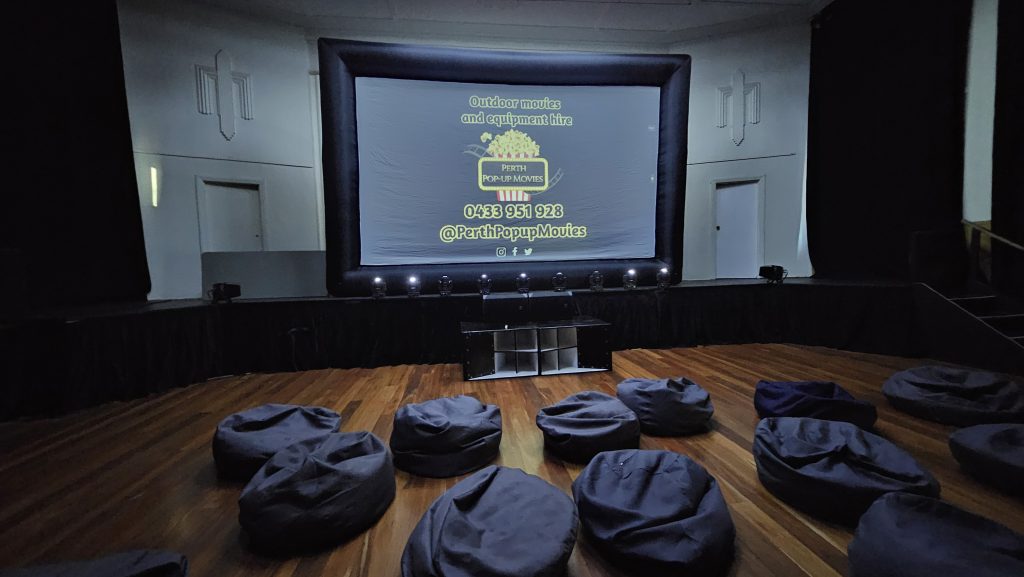
Stirling outdoor cinema event approval starts with one question: is your screening on City land or open to the public? If it is in a City park or reserve, open to the public whether free or ticketed, or likely to draw more than 100 people, the City of Stirling asks for an online event application, and it wants that application at least eight weeks before the night. A backyard birthday screening for invited friends usually sits outside the process. I run screens for community groups, schools and clubs, so below is how the approval side looks from where I stand, with the City's own pages linked so you can check each point yourself. It is general information only, and the City's events team has the final word on your event.
Stirling Outdoor Cinema Event Approval: The Short Version
Here is the whole process in a few lines before the detail.
- Check whether your event needs an application at all, using the triggers in the next section.
- Book the venue first, because the City asks for the venue to be locked in before the application goes in.
- Lodge the online application at least eight weeks out, with a public liability certificate and a site plan attached.
- Send the supporting paperwork at least four weeks out, then wait for written approval and its conditions before you promote the night.
- Arrange the film licence separately, because the City's approval does not cover it.
The City publishes a page for event organisers and a detailed Event Application Guidelines and Requirements document. Both are updated from time to time, so treat my summary as a map and the City's documents as the territory.
When an Outdoor Cinema Night Needs an Application
The City's event page says an online application is needed when an event is on City-owned or managed land, is in a public place such as a park or beach reserve, is open to the public, or expects more than 100 attendees. Any one of those is enough. A free community screening on a reserve ticks several boxes at once.
The page also says private birthday parties and similar social gatherings usually do not need an application, unless they go past 100 people or bring in things like bouncy castles or food trucks. The page says events on private land, other than residential premises, go to the City's Environmental Health team rather than the online portal, and the page counts a ticketed public event on private land as needing an application too. A screening in a club car park or church grounds still needs a conversation with the City.
An event running longer than 48 hours including setup and pack-down, or a series of events, may need a development application, so raise a weekly summer series with the events team early. I will not quote fees here, because the event page does not list any and I would rather send you to the source than guess.

Parks, Reserves and the Foreshore
The venue comes before the event application. The guidelines say City reserves, beaches and facilities are available for events depending on the size and needs of the event, and that venues should be booked before the application is submitted. They also stress that written confirmation of a venue booking is not approval to hold the event. It only secures the space.
Not every green patch works. The guidelines say sporting reserves are generally not approved for events, and that certain areas needing heavy maintenance or conservation may not be used at all. They list natural areas such as lakes, dunes and beaches among the things to discuss when you book, along with how the ground can be used, including vehicle access and pegging or staking. That last item matters for a cinema night, because an inflatable screen is held down with stakes on soft ground or with weighted bases on hard surfaces. The guidelines say large stakes of more than 10cm, pegs and other ground staking are generally not supported, and that any approval may need a Before You Dig application or underground surveying at the organiser's expense. Tell the venue team how the screen is anchored before you book.
Services are the other surprise. The guidelines warn that public toilets in reserves or clubrooms may not be open to your event, and that power, water and lights have to be discussed at booking. If a reserve has no power point near the flat area you want, you will need a generator or a silent battery inverter, and the City may have a view on which. Our generator versus battery inverter guide lays out the trade-offs.
What to Lodge, and How Early
The City sets two deadlines that matter for a small public screening. The online application goes in at least eight weeks before the event, and the City says late applications are not accepted. It suggests allowing eight to twelve weeks for processing. Supporting and final documents are due at least four weeks before the event, and late documents may not be accepted and can put the event, or parts of it, at risk.
The guidelines list a public liability certificate of currency, a scaled site plan and a Form 1 public building application as mandatory for every event, and the online form will not progress without the certificate and the site plan. The site plan should show where the screen, seating, toilets, power, first aid and exits sit. Other documents depend on the event, and the guidelines also list a risk management plan, so ask the events team which plans apply to a small screening. The guidelines mention a food vendor list with permit numbers if anyone is selling food, a noise management plan where noise could affect residents, a medical plan from a first aid provider, an emergency management plan for larger events, and a crowd management and security plan where licensed security is needed.
Approval arrives in writing with conditions you must follow. If you want a step-by-step view of a community night from the organiser side, our guide to organising a community movie night pairs well with this one.
Insurance the City Asks For
The guidelines state that public liability cover of no less than $20 million is mandatory, and that a current certificate of currency must be uploaded to get through the application. The guidelines add that the insurance must be held in the name of the event owner and that the policy should cover the event and its associated activities.
Perth Pop-Up Movies holds $10 million public liability insurance, and the Certificate of Currency is available on request. That is cover for my business, and I would not assume it settles the City's requirement for your event. Ask the events team what it needs to see and from whom, and ask your own insurer whether your group's policy responds to a hired-in cinema setup. I cannot give insurance advice, but the question is quick to ask and expensive to skip.
Toilets, Noise and the Public Building Rules
The guidelines treat a public event as a public building under the Health (Public Buildings) Regulations 1992, even when it is in a park. In practice that means the City assesses your expected crowd against toilets, usable floor area and exits, and may issue a certificate of approval for the maximum number of people. Give the City a realistic crowd number.
Toilets and hand washing must be arranged for every event, and the number provided can set the number of people allowed. There must be an accessible toilet, and toilets need lighting if any part of the event runs after dark, which a cinema night always does.
Noise is the topic I get asked about most. The City says an event with amplified music or other noise that could affect residents or sensitive premises needs a noise management plan, and its timeline table puts noise exemption applications at least 60 days out. A film soundtrack through a PA is amplified sound, so ask Environmental Health whether your site and crowd size trigger a plan. The Scarborough Beach Precinct has its own venue approval with noise conditions, so check that separately if you are near the coast. Our post on noise and neighbours at outdoor movie nights covers the practical side of keeping the volume local.
What the Screen Side Needs From Your Site
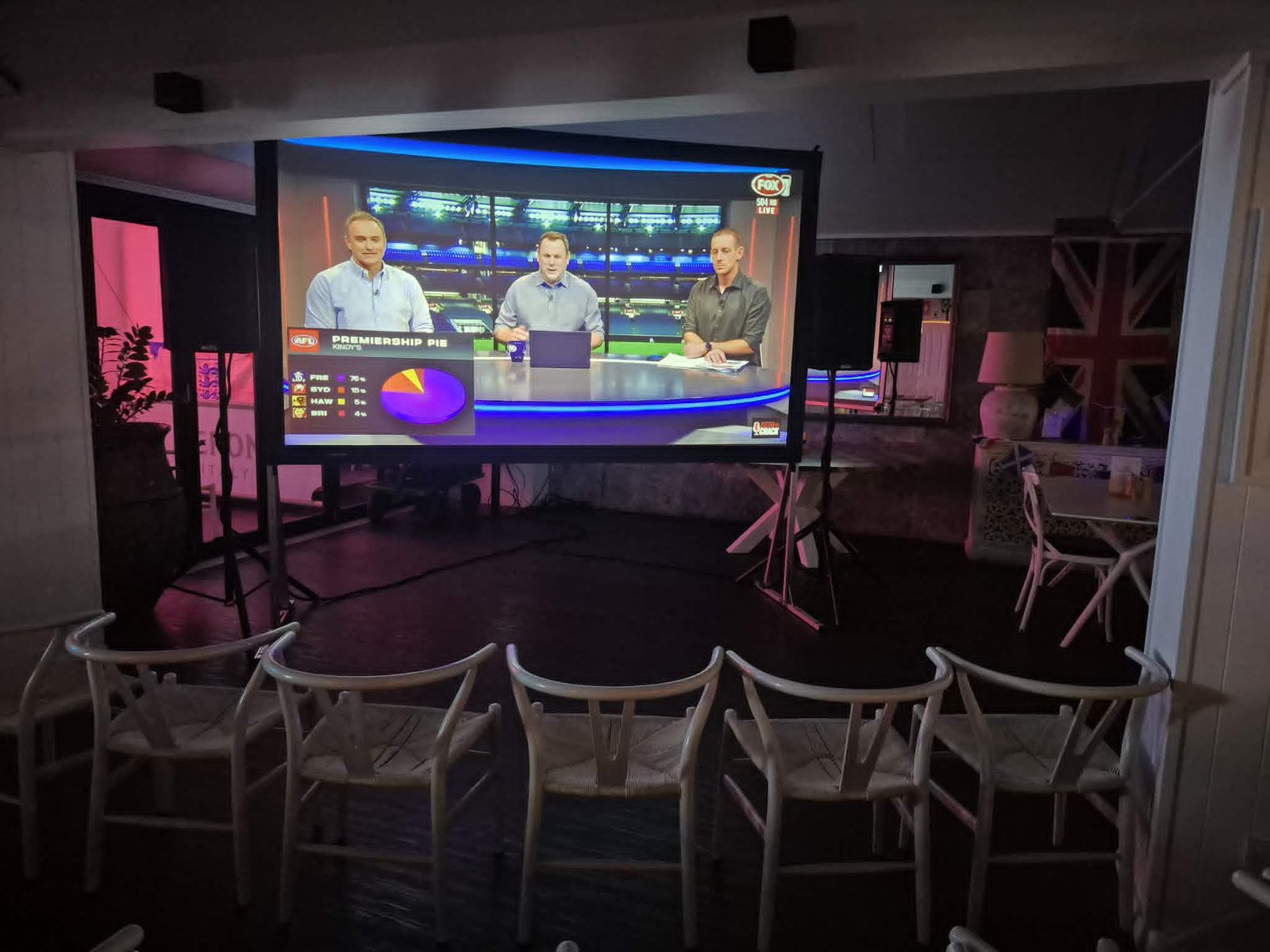
This is the part I can speak to firsthand. The 5m community screen is from $600 and suits 50 to 230 people. It needs a flat area of about 12m by 12m, plus the audience space in front, and I allow 90 minutes for setup. The 8m community screen is $1,100 and suits up to 1,200 people. It needs about 17m by 17m of clear flat ground, and I allow two hours for setup. For a smaller gathering, the 3m inflatable screen starts from $280.
The 5m needs mains power within 30m of the screen. The 8m needs 30 amp mains for the blowers, projector and sound system, and we carry a three phase lead 30m long, so a 30 amp supply within 30m of the screen works. A generator or silent battery inverter is the alternative where there is no power, at $150 on the 5m and $500 on the 8m, with fuel or charge included. Delivery on the larger screens is $4 per kilometre from Kwinana, confirmed at booking, and an operator stays for the whole event.
The safety paperwork councils like to see is available. The 5m page offers a council compliance pack, and a Job Safety Analysis, a waste management plan and the Certificate of Currency can be supplied on request. The screens have a 35 km/h sustained wind limit, with a go or no-go call by 12pm on the day based on the Bureau of Meteorology forecast. Our weather policy explains what happens if conditions are unsafe, and the Stirling outdoor cinema hire page covers the local details.
The film licence is a separate matter. The City's pages do not mention it, because it is a copyright question rather than a council one. A public screening needs a public performance licence, which the organiser arranges through Roadshow PPL. My movie screening licence guide explains when you need one and what it costs.
A Working Timeline for a Stirling Screening
Counting back from the night you want, this is the order I would follow.
- Twelve or more weeks out: pick two possible dates, contact the City's events team and ask about venue availability.
- At least ten weeks out: book the venue, since the guidelines put the venue hire booking at that mark.
- Eight weeks out at the latest: lodge the online application with the insurance certificate and site plan, and note that the City's table also lists food permits at two weeks out.
- Four weeks out at the latest: send the supporting documents, food vendor list and any noise paperwork.
- Once the film licence is approved: promote the night, using the written conditions as your checklist.
- The week before: confirm the weather decision point with me and walk the site for trip hazards.
Booking the Screen
Once you have a venue in mind, send me the site, the expected crowd and the date through the contact page, or call 0433 951 928. I can tell you which screen fits the space, what power the site needs and whether the ground suits the anchoring. A 50 percent deposit holds the date and the balance is due seven days before the event. The community events page shows the wider range of what we run for councils, schools and clubs.
Our public liability insurance covers our operations. Hired equipment is not covered, see Terms clause 19.