
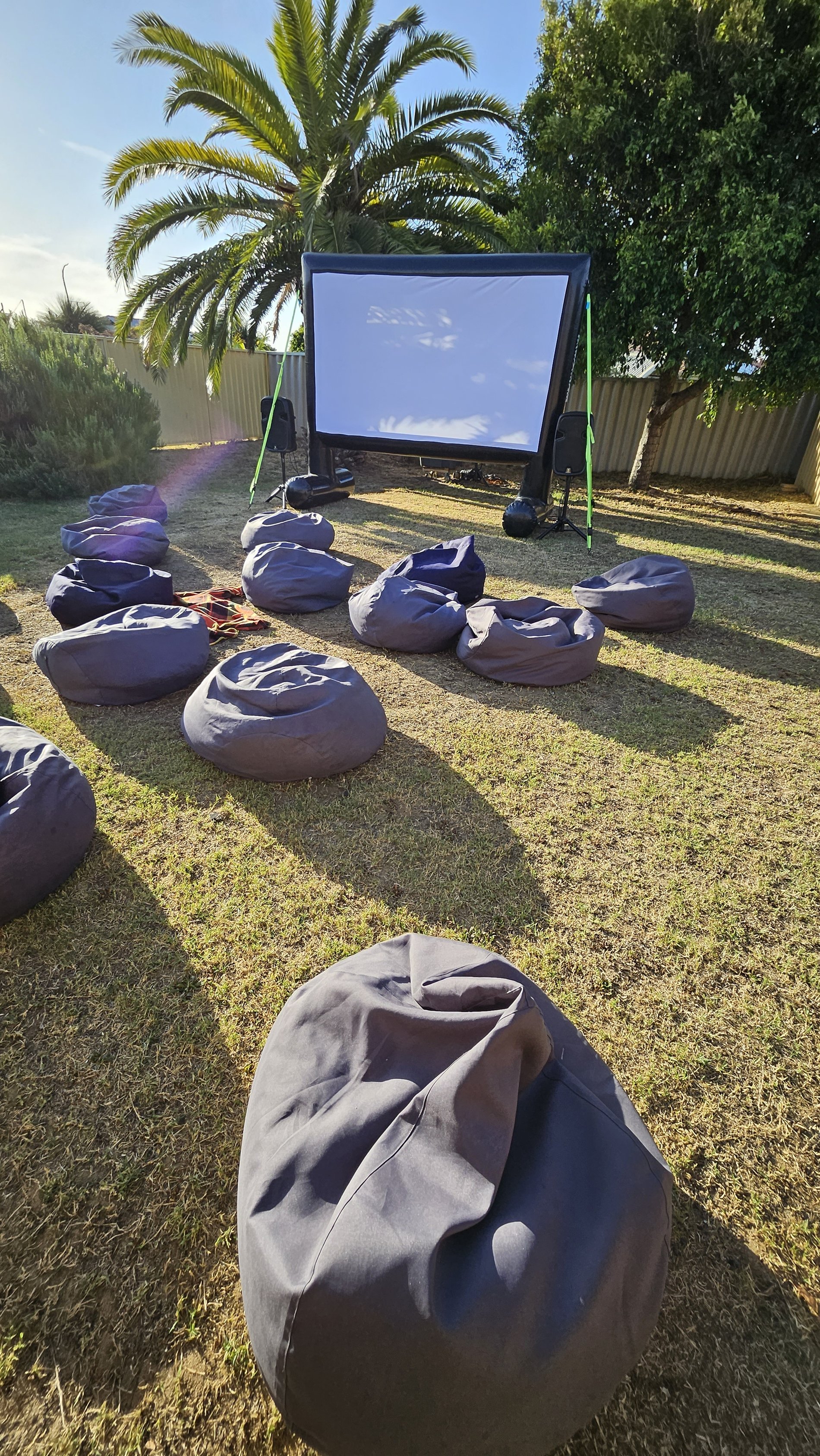
A backyard movie night in Perth is genuinely one of the best things you can do with a warm evening. No traffic, no overpriced snacks, no strangers talking over the film. Just your backyard, your people, a proper screen, and whatever you feel like watching. This guide covers everything you need to pull it off well, whether you are doing it yourself or considering hiring a professional setup. It is written from real experience running backyard cinema nights across Perth since 2020, not from generic advice that applies anywhere in the world equally.
In this guide
- Planning your night
- Equipment you actually need
- Setting up your space
- Perth-specific tips
- Food, drinks, atmosphere
- Hire vs DIY
- Full setup checklist
- FAQs
Planning your backyard movie night
Good backyard cinema nights are not complicated but they do require a bit of thought up front. The two things that kill backyard movie nights are starting too early (ambient light washes out the image) and not checking the forecast (Perth weather is mostly reliable but occasionally not).
Picking a date and time
Perth summer sunsets run between 7:30pm and 8:00pm in December and January, settling to around 7:00pm by March. Add 30 to 45 minutes for full dark. That means a practical cinema start time is 8:00pm in midsummer, closer to 7:30pm in March and April. Do not advertise a 7:00pm start in January unless you are happy with a washed-out image for the first 45 minutes.
The best months for backyard movie nights in Perth are February, March, and April. The worst heat of summer is fading, evenings are cooler and more comfortable, the Fremantle Doctor has calmed down, and sunsets are earlier so you can start the film sooner. November and December work well too but December Saturdays book out fast if you are hiring equipment.
Checking the forecast
Check the Bureau of Meteorology Perth forecast the morning of your event. You are looking at two things: wind and rain. A bit of wind is fine for a framed screen or a well-staked inflatable. Sustained winds above 25 km/h make for uncomfortable viewing. Above 35 km/h an inflatable screen needs to come down. Rain in Perth is rare in summer but when it happens it can be heavy. Have a backup venue option (a large patio, pergola, or undercover area) or a reschedule date agreed with guests in advance.
How many people?
A standard Perth suburban backyard comfortably fits 15 to 25 people for a cinema setup with a 3m screen. More than 30 and the viewing angles at the sides start to suffer. For larger groups, consider a park or oval with a bigger screen. See our community screening options for events over 50 people.
The equipment you actually need
Most DIY backyard cinema setups underestimate two things: projector brightness and sound quality. Outdoor settings are unforgiving on both.
The screen
You have three real options for a backyard cinema screen in Perth:
- 3m inflatable screen: The most popular choice. Sets up in 30 to 45 minutes, looks impressive, handles a standard suburban backyard well. Needs soft ground for staking and mains power for the blower. A low-level hum runs continuously from the blower fan. Hire from $280.
- 3m framed screen: Rigid aluminium frame with tensioned fabric. Completely silent (no blower), slightly sharper image, handles wind better. Better for sheltered backyards or for people who find the blower noise distracting. Same price as the inflatable. Hire from $280.
- White wall or sheet: Works in a pinch but loses 20 to 30% brightness compared to a proper screen surface. Any texture or colour in the wall shows through the projected image. We do not recommend it if you can avoid it.
The projector
Outdoor cinema requires a high-lumen projector. Consumer projectors marketed for “home theatre” (typically 1,500 to 2,500 ANSI lumens) struggle significantly outdoors before full dark. For a 3m screen in a backyard with ambient streetlight and sky glow, you want at minimum 4,000 ANSI lumens. 5,000 lumens is more comfortable. This rules out almost every consumer projector under $500.
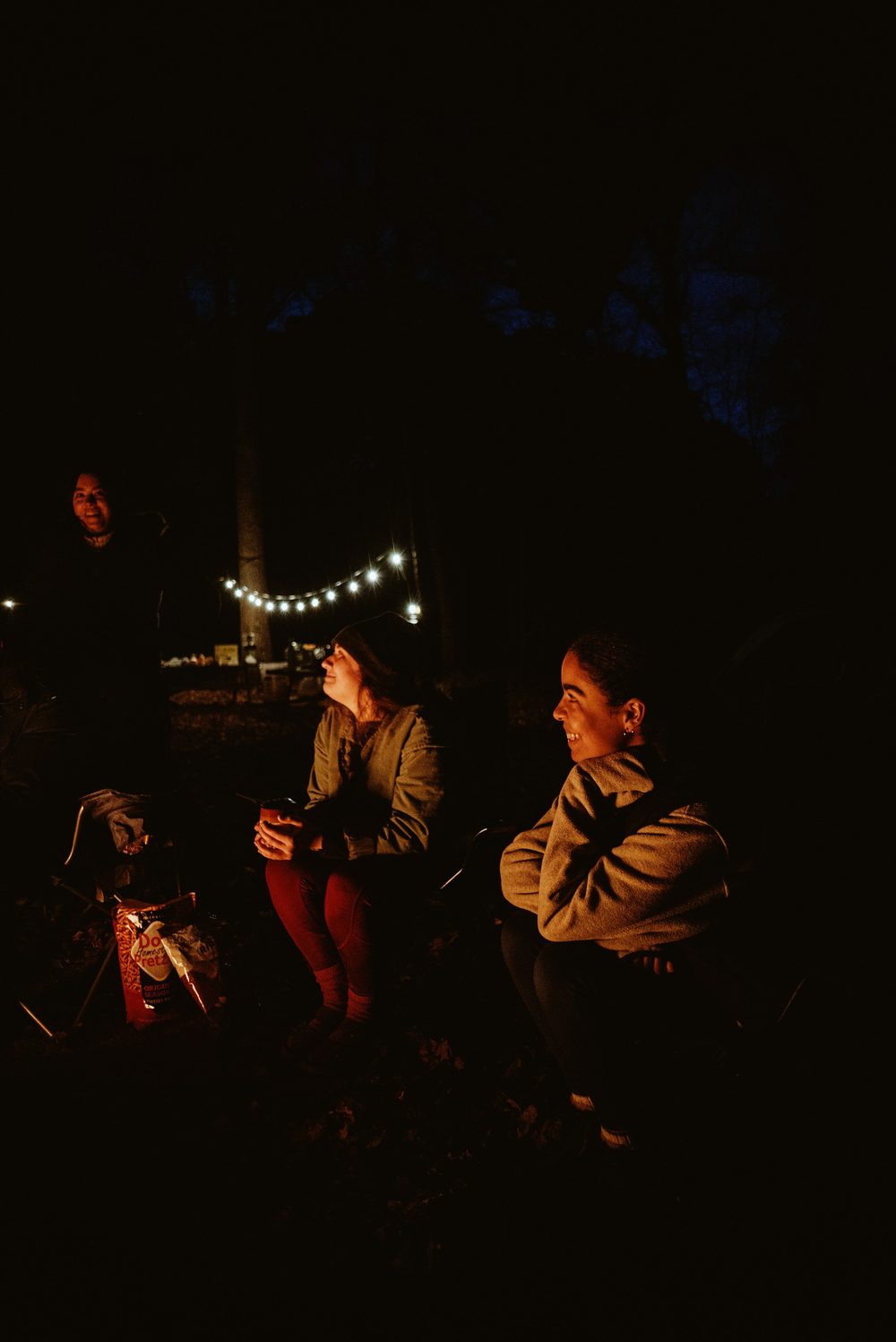
Our hire packages include projectors matched to each screen size and calibrated for outdoor conditions. If you are buying your own, look at the XGIMI Horizon Pro or the BenQ TK850 as starting points for the brightness range you need outdoors.
Sound
This is where most DIY backyard cinemas fall down hardest. A Bluetooth speaker that sounds fine indoors sounds thin and distant in a 10m x 10m open backyard. Outdoor acoustics have no walls to reflect sound, so it disperses in every direction simultaneously.
For 20 to 30 people outdoors, you need a proper PA speaker on a stand, positioned at head height at the front of the audience area. A single 12-inch active PA speaker (like a QSC K12.2 or Yamaha DXR12) delivers clean, even audio to a backyard audience. Two is better. Home theatre systems dragged outside generally do not perform well due to placement constraints and speaker directionality.
Our cinema packages include properly sized sound systems for each event scale. A speaker upgrade add-on is available from $100 for events where audio clarity is a priority.
Power
A 3m inflatable setup draws roughly 500W to 800W total (blower, projector, sound). A standard domestic power point can handle this. You need an outdoor power point or a 20 to 30 metre heavy-duty extension lead rated for outdoor use. Run cables along the fence line or under a rug to avoid trip hazards. If you have no outdoor power access within 30 metres, a portable generator or silent battery inverter is the solution. Our hire includes a silent battery inverter option at the same price as a generator, with zero engine noise.
Setting up your outdoor space
Screen placement
Orient the screen so the audience faces away from any ambient light sources (street lights, neighbouring house windows, the kitchen door). Audiences facing toward light sources get glare; the screen facing toward them gets washed out. Neither is ideal. A north or east-facing screen in a Perth backyard typically works well for evening events.
The screen needs a flat area 1.5 times its width in every direction. For a 3m screen: allow 5m wide and 5m deep minimum. Add 4 to 6 metres in front for the projector throw distance, plus your audience depth behind that.
Seating
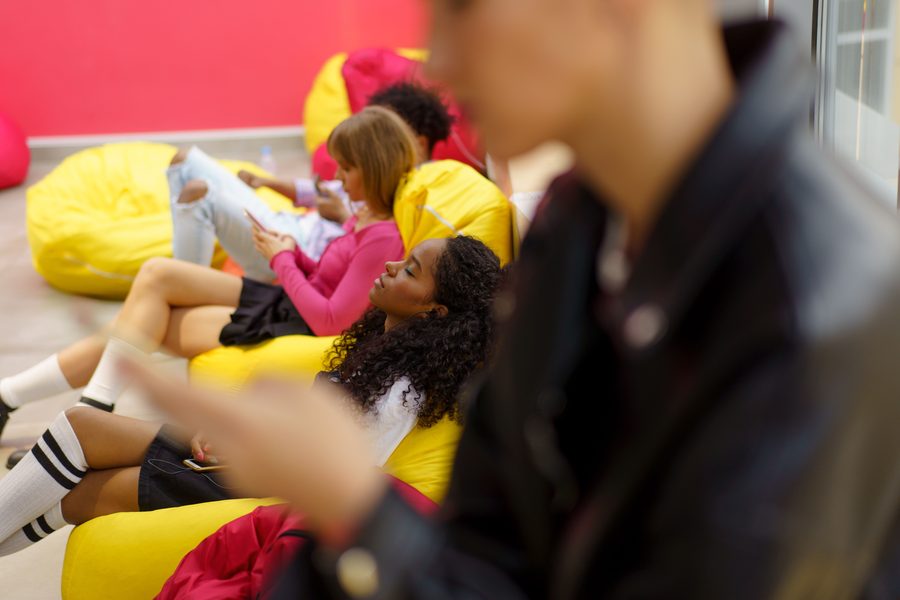
Bean bags are the most popular choice for backyard cinema. They are comfortable for 2 to 3 hour films, can be reclined, and kids love them. Hire adult-sized cinema bean bags in 7 colours through us from $11 each. Picnic blankets work for the outer rows. Fold-up camping chairs are good for guests who struggle to get up from ground level. Arrange seating in a slight arc or staggered rows so rear guests can see over front guests’ heads.
Lighting
You want just enough ambient lighting for guests to navigate the space safely without washing out the screen. String lights along the fence at low brightness, lanterns on tables, and a low-power pathway light work well. Avoid anything pointing toward the screen. Turn off internal house lights that spill into the backyard during the screening.
Perth-specific tips for backyard movie nights
The Fremantle Doctor
Perth’s afternoon sea breeze typically arrives from the southwest between 2pm and 4pm and can run at 20 to 30 km/h through the early evening. By 8pm it usually settles to 10 to 15 km/h, which is perfectly manageable. For inland suburbs (Armadale, Midland, Kalamunda), the Doctor arrives later and weaker. For coastal suburbs (Cottesloe, City Beach, Fremantle), it can run stronger for longer. If you are in a coastal suburb, a framed screen handles this better than an inflatable.
Heat
January and February evenings in Perth can still be 30 degrees at 8pm. Set up in a shaded area if possible and have fans running during pre-screening time. Cold drinks are not optional at a Perth summer cinema night. The comfort of your audience drops significantly after 90 minutes if they are hot. Consider starting later in those months so the evening has cooled properly.
Mosquitoes
Perth summers bring mosquitoes, particularly in gardens with any standing water nearby. Citronella candles, coils, or a plug-in repellent running from an outdoor power point all help. Mention it to guests when you send invitations so they know to bring repellent.
Streaming and licensing
For a private backyard event among friends and family, you can use Netflix, Disney+, Stan, Prime Video, or any HDMI source legally. Public events, ticketed screenings, and fundraisers require a Roadshow Public Performance Licence. A backyard birthday with 20 friends is private. A neighbourhood street party with ticket sales is public. If you are unsure, ask us when you book.
Food, drinks, and atmosphere
Food that works at a backyard cinema is food that is quiet to eat, easy to handle in the dark, and does not require cutlery. Popcorn is the obvious choice. Pre-made sliders, chips, charcuterie boards, and small desserts all work well. Avoid anything that requires a plate and fork. Cutlery scraping on ceramic is surprisingly loud outdoors.
Set up a self-serve food and drinks table away from the screen so guests can refill without blocking the view. Brief people on the “grab it during the ad break” principle. Consider using dim red LED lights at the food table. Red light does not affect night-adapted eyes as much as white light and keeps the cinema atmosphere intact.
A short pre-film playlist playing from 30 minutes before start time sets the mood and fills the awkward gap while guests arrive. Match it to the genre if you like: classic jazz for a Humphrey Bogart film, synthwave for anything sci-fi, pop hits for a family night.

Perth tip: In summer, refrigerate drinks earlier than you think necessary. Esky performance degrades quickly when ambient temperature is 35 degrees. Ice goes fast. Plan for more than you think you need.
Hire a backyard cinema vs doing it yourself
Whether to hire or DIY comes down to how much you value your time and how important picture and sound quality are to you.
For a regular family movie night, DIY with whatever you have works fine. For a birthday, anniversary, or any event where you want to actually enjoy the night rather than troubleshoot it, professional hire is genuinely worth it at $280.
Want us to handle everything?
We deliver, set up, and run backyard cinema nights across Perth from $280. 3m inflatable or framed screen, high-brightness projector, professional sound. You focus on your guests.
Complete backyard movie night setup checklist
Work through this in order. Each step catches a different category of problem before it ruins the evening.
Check the forecast (morning of the event)
Bureau of Meteorology Perth forecast. Wind above 35 km/h: switch to a framed screen or postpone. Rain likely: activate backup plan or reschedule.
Mark out your screen position
Orient away from ambient light sources. Allow 5m x 5m minimum for a 3m screen plus 4 to 6m projector throw in front.
Run power before setting up equipment
Test outdoor power point or extension lead. Confirm the circuit can handle screen, projector, and sound simultaneously.
Set up and inflate the screen
For inflatables: inflate until taut, stake or sandbag all four corners. For framed: assemble frame, attach and tension the screen fabric.
Position and calibrate the projector
Centre at screen height. Adjust throw distance until the image fills the screen. Use keystone correction to square the image. Check focus.
Set up and test sound
Speakers on stands at head height, front corners of audience area, angled inward. Test at event volume from the back row position.
Test your streaming source
HDMI connection confirmed. Streaming service logged in and loading. Audio routing to the sound system, not the projector’s built-in speaker.
Set up seating and lighting
Bean bags or chairs in arc or staggered rows. String lights or lanterns at low brightness. Food and drinks table away from the screen.
Do a full test run 30 minutes before guests arrive
Play 5 minutes of actual content. Walk to the back of the seating area. Check image quality, brightness, audio level, and audio clarity. Fix anything now, not after people arrive.
Backyard movie night Perth FAQs
Ready to book a backyard cinema night in Perth?
We deliver across Perth metro and the Peel region. 3m screens from $280. No surcharges for weekends or public holidays. We confirm availability within 24 hours.
Related guides
Full service page with packages, pricing, and booking
Our most popular backyard cinema package from $280
Silent, wind-resistant alternative from $280
Adult-sized cinema bean bags in 7 colours from $11 each
Six common problems and exactly how to fix them
Everything about outdoor cinema hire across Perth
Planning a Backyard Movie Night in Perth
The 3m inflatable screen from $280 fits almost any Perth backyard and includes the projector, PA, delivery and setup. Add bean bags for comfort and the Party Pack for effects, and check our darkness guide to set the right start time.
See everything on the cinema hire page and tell us your suburb and guest count on the contact page.